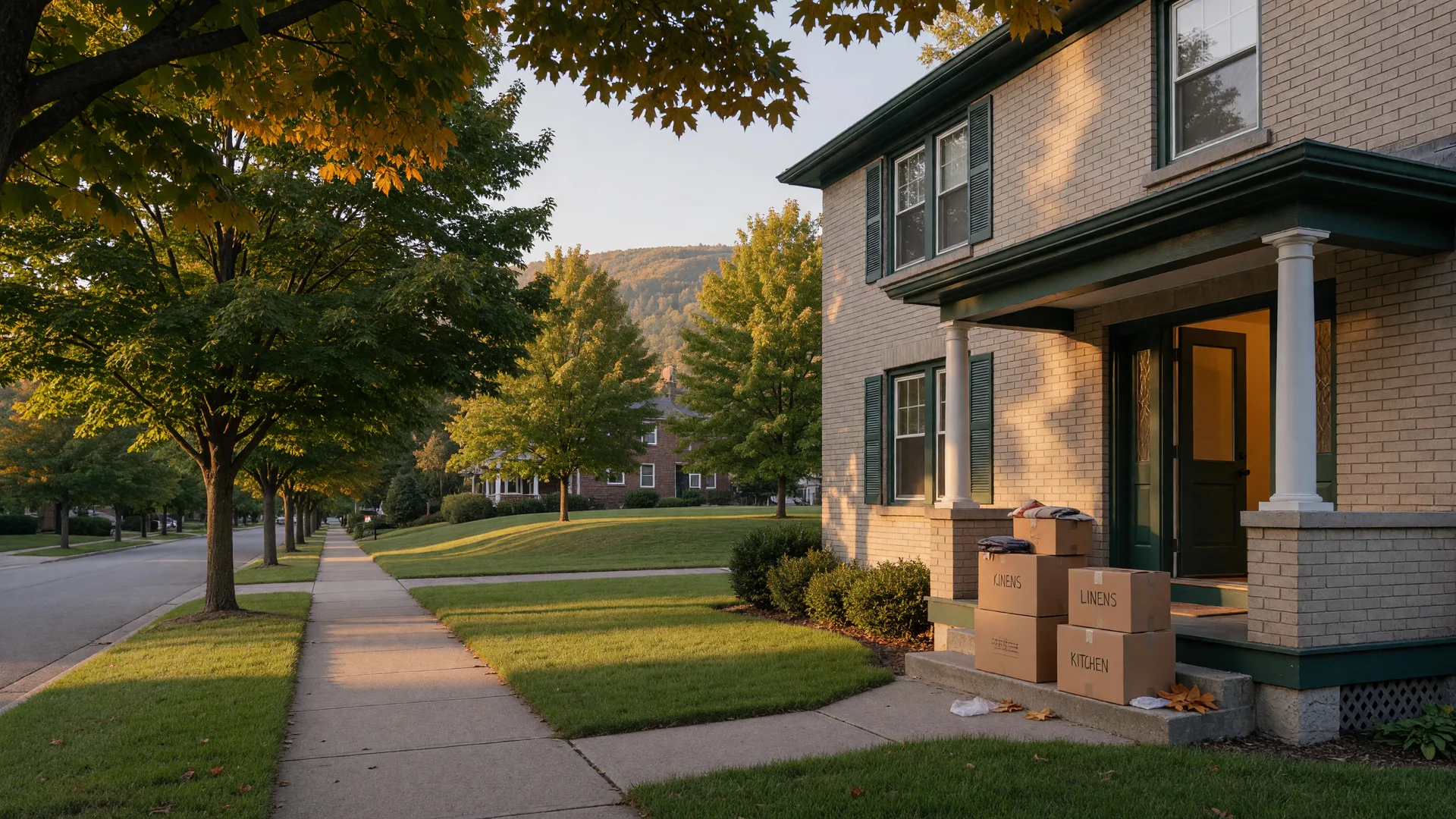
Selling an Inherited Home on Hamilton Mountain: A Guide for Estate Executors
By Tory Akene, REALTOR® | Real Broker Ontario Ltd. · · 8 min read
Few tasks feel heavier than selling a parent's or grandparent's home on the Hamilton Mountain after a loss. The house on Upper Wellington or across the escarpment trails holds decades of family memories, and now you're being asked to make careful legal, financial, and emotional decisions about it. This guide walks estate executors and family members through how estate sales actually work in Ontario, step by step, so you can protect the estate, honour your loved one, and sell with confidence.
First: Do You Have the Legal Authority to Sell?
Before a home can be listed, the person selling it needs the legal authority to do so. In Ontario, that authority is called a Certificate of Appointment of Estate Trustee — commonly known as probate. This court-issued certificate proves the executor's authority, and both the land registry office and the buyer's real estate lawyer will expect to see it before a deceased person's home can be sold or transferred.
Ontario charges Estate Administration Tax (the "probate fee") of roughly 1.5% of the estate value above $50,000, payable before the certificate is issued. On a typical Hamilton Mountain home valued around $700,000, that works out to roughly $9,750 in estate administration tax. It's a real cost, and it's one of the first things to plan for when you're budgeting the estate.
Source: Ontario Ministry of the Attorney General — Estate Administration Tax; Probate Law Group — Certificate of Appointment of Estate Trustee in Ontario.
The Executor's Role: What You're Actually Responsible For
As the estate trustee (executor), you act as a fiduciary. That means your job is to manage and protect the estate for the beneficiaries, not for your own convenience. Your responsibilities typically include:
Secure the property and its records
Arrange insurance, winterize the home if it will sit vacant, secure valuables, and locate the deed, mortgage statements, and recent utility bills.
Get a fair market valuation
The estate needs a defensible value for the deceased's final tax return. A REALTOR®'s comparative market analysis documents how the value was reached, which matters because the estate information return is auditable against MPAC assessments.
Decide how and when to sell
With input from beneficiaries and the estate lawyer, you'll decide whether to sell quickly, renovate first, or hold for a better market. On Hamilton Mountain, most estates are sold as-is with a professional cleaning, because waiting usually costs more in carrying costs than it gains in price.
Pay debts and file tax returns
The estate pays any outstanding debts and final expenses, files the deceased's terminal T1 return and the estate's T3 return, and eventually distributes what's left to the beneficiaries.
Source: Canada Revenue Agency — Duties of an executor; Mills & Mills LLP — Clearance Certificates for Estates.
Capital Gains: The Tax Question Families Worry About Most
Here's the reassuring news: Canada has no inheritance tax. When someone dies, there's a "deemed disposition" of the home at fair market value, and any capital gain up to the date of death is generally reported on the deceased's terminal tax return, not on yours.
If the home was your loved one's principal residence for all the years they owned it, the Principal Residence Exemption typically shelters the entire gain, so there's often no capital gains tax at all on the family home. The exemption is claimed on Schedule 3 of the tax return, and it's one of the main reasons the family cottage question is different from the family home question — a property that was never a principal residence, or only partly one, can leave a partial gain that's taxable.
A spousal rollover is another important path: property that passes to a surviving spouse can roll over on a tax-deferred basis instead of triggering a deemed disposition. If you're not sure which situation applies, this is exactly where an accountant who specializes in estates earns their fee.
Source: Canada Revenue Agency — Principal Residence and other real estate; Wealthsimple — Principal Residence Exemption guide.
The CRA Clearance Certificate: Don't Distribute Too Soon
One of the most important safeguards in estate administration is the CRA Clearance Certificate. Before making the final distribution of proceeds to beneficiaries, the executor is required by section 159(2) of the Income Tax Act to obtain this certificate from the CRA. It confirms that all amounts owed by the deceased and the estate — income tax, GST/HST, and related interest — have been assessed and paid.
Why does this matter? If you distribute the estate's funds without the clearance certificate and the CRA later finds taxes owing, you can be held personally liable for those unpaid amounts. The application uses form TX19, and it's a step that can take several months, so the smart move is to apply after the tax returns are filed and assessed, well before you plan to write the final cheques to beneficiaries.
Source: Canada Revenue Agency — Apply for a clearance certificate (TX19).
Preparing an Estate Home to Sell on the Hamilton Mountain
Estate homes on the Mountain are often well-built but dated — original 1970s kitchens, decades of personal belongings, and deferred maintenance. You don't need a full renovation to sell well, but you do need to make the home presentable and marketable. From experience across Ancaster, Central Mountain, and Upper Stoney Creek, here's what moves the needle:
My Practical Checklist for Estate Listings
- Clear the clutter first. A professional estate liquidation company can handle contents, from furniture to decades of personal effects, often for a portion of the proceeds. What's left should be staged or removed so buyers can picture their own family in the space.
- Invest in a deep clean and small fixes. Fresh paint in a neutral warm tone, new cabinet hardware, and a tidy yard are the highest-ROI steps. Skip the big renovation — buyers on the Mountain understand they're buying a well-loved home and value a fair price over a gut job.
- Get a pre-listing inspection. Estate homes are often sold "as is," but knowing the age and condition of the roof, furnace, and electrical before you list lets you price honestly and avoid surprises at the offer stage.
- Price for the current market, not sentiment. It's natural to value the home through family memories. The market doesn't. Current comparables on your specific street are the only honest guide, and overpricing an estate home is the fastest way to let it sit and lose negotiating power.
Reference: Existing Life on Hamilton Mountain guides on pre-listing inspections and home staging.
Selling as Is vs. Small Updates: What Estate Sellers Should Know
The biggest strategic question for an executor is whether to sell the home as is or spend a little to improve the sale. On today's Hamilton Mountain market, where detached homes average about $717,000 and buyers have real options, presentation matters. An estate home that shows clean, bright, and well-priced competes with every other family home in its pocket of the Mountain.
That doesn't mean a renovation. It means spending where it shows: neutral paint, clean floors and windows, tidied landscaping, and professional photography. These are modest out-of-pocket costs that are repaid through a faster sale and less negotiating pressure. Your REALTOR® can also hold a brief "estate sale" open house that lets neighbours and local buyers preview the home before the formal offer date — a step that consistently brings out serious, motivated buyers on the Mountain.
Reference: Life on Hamilton Mountain guides on home staging and selling a home fast.
A Step-by-Step Timeline for Estate Sellers
Estate sales take time, and most of that time is administrative, not marketing. Here's a realistic sequence:
Obtain the Certificate of Appointment. Probate comes first, before listing. Budget several weeks (and the estate administration tax) for this step.
Get a valuation and decide on timing. Work with a local REALTOR® and the estate lawyer to document fair market value and confirm there's no rush to sell for tax reasons.
Prepare the home. Clear contents, deep clean, make small repairs, and invest in professional photography. This usually takes two to four weeks.
List and market. Plan on a 30 to 45 day marketing window on the Mountain in a balanced market — with an offer date if interest is strong.
Close the sale. The lawyer pays off the mortgage and debts and holds the remaining proceeds for the estate.
File returns, then distribute. File the terminal and estate returns, obtain the CRA clearance certificate, and only then distribute to beneficiaries.
Reference: Life on Hamilton Mountain selling timeline guides.
Frequently Asked Questions
Do we have to pay capital gains tax when we sell our parent's house?
Usually not on the family home. If the home was your parent's principal residence for all the years they owned it, the Principal Residence Exemption shelters the gain on their terminal return. Situations like a cottage, a rented portion, or a home that wasn't the principal residence for part of the ownership period can leave a taxable gain. A tax accountant who specializes in estates is the right person to confirm your specific case.
Can the executor list the house before probate is complete?
In practice, most listings wait until the Certificate of Appointment is issued, because both the land registry and the buyer's lawyer will require it before title can transfer. In some cases a listing can be prepared during probate to save time, but the sale itself depends on the executor's legal authority being in place. Your real estate lawyer can advise on the timing for your specific situation.
How long does selling an estate home take on the Hamilton Mountain?
Plan for several months from start to finish. Probate alone can take weeks, preparation another few weeks, and a typical marketing window is 30 to 45 days. Add tax return filings and the CRA clearance certificate before distribution, and the whole process comfortably runs three to six months. Starting early, with the right team, is the best way to keep it moving.
What if the beneficiaries disagree on selling?
Disagreements happen more than people expect, especially around timing and price. The executor's duty is to the estate as a whole, not to any one beneficiary's preference. Clear communication, documented decisions, and involving the estate lawyer early can resolve most disagreements before they become disputes. If a family member wants to keep the home, buying out the other beneficiaries at fair market value is often the cleanest path.
The Bottom Line
Selling a family home after a loss is an emotional job with a very practical checklist attached. The good news is that you don't have to carry it alone. An experienced estate team — a real estate lawyer, a tax accountant, an estate liquidation company, and a REALTOR® who knows the Hamilton Mountain market — turns an overwhelming task into a manageable, well-documented process.
I've helped many families on the Mountain through estate sales, and I always say the same thing: the goal is to handle the home with care, sell it for fair market value, and get the proceeds to the people your loved one wanted to receive them. If you're facing this, I'd be honoured to walk through it with you.
Selling an estate home on the Mountain?
Book a complimentary planning call with Tory Akene. She'll pull the latest comparables for the property, explain how estate sales work on the Hamilton Mountain, and help you build a sensitive, practical plan for your family.
Book a Free Call